
Last updated November 15, 2026
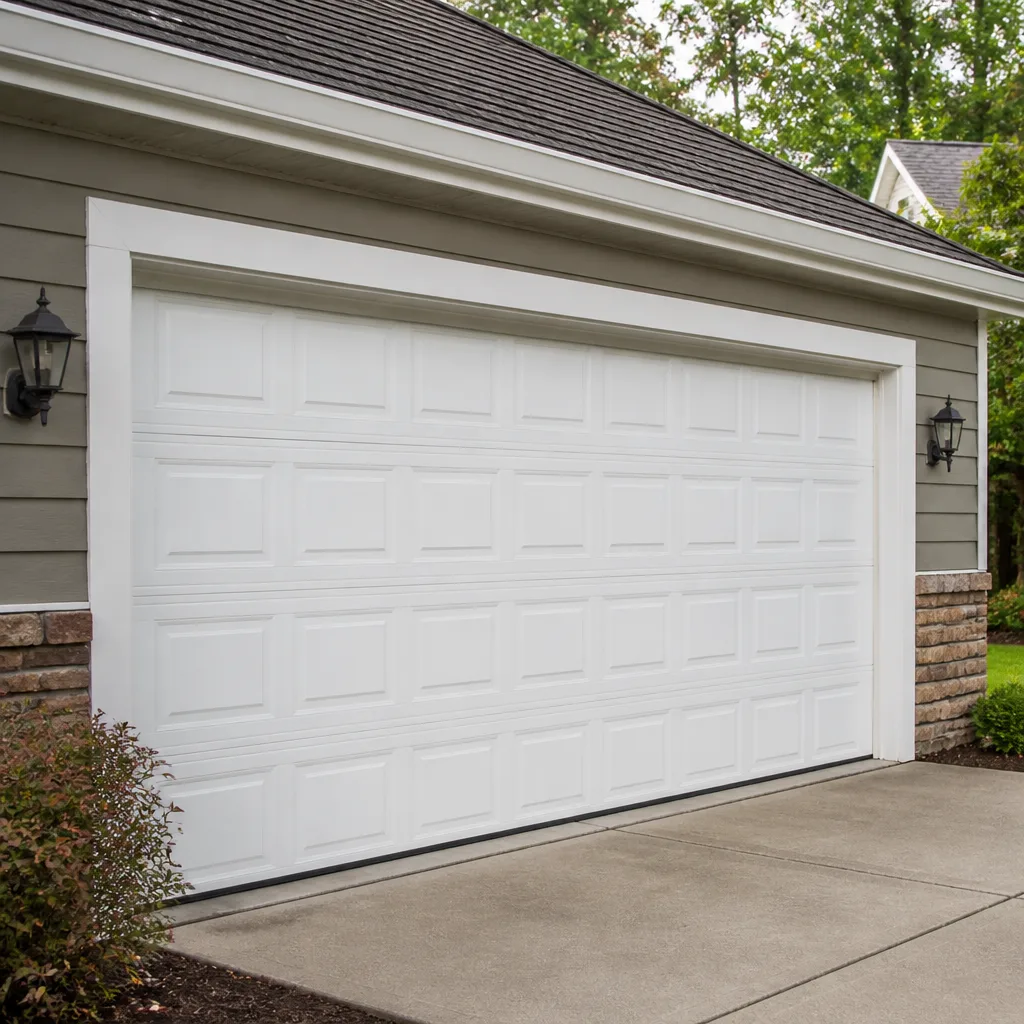 Raised-panel steel
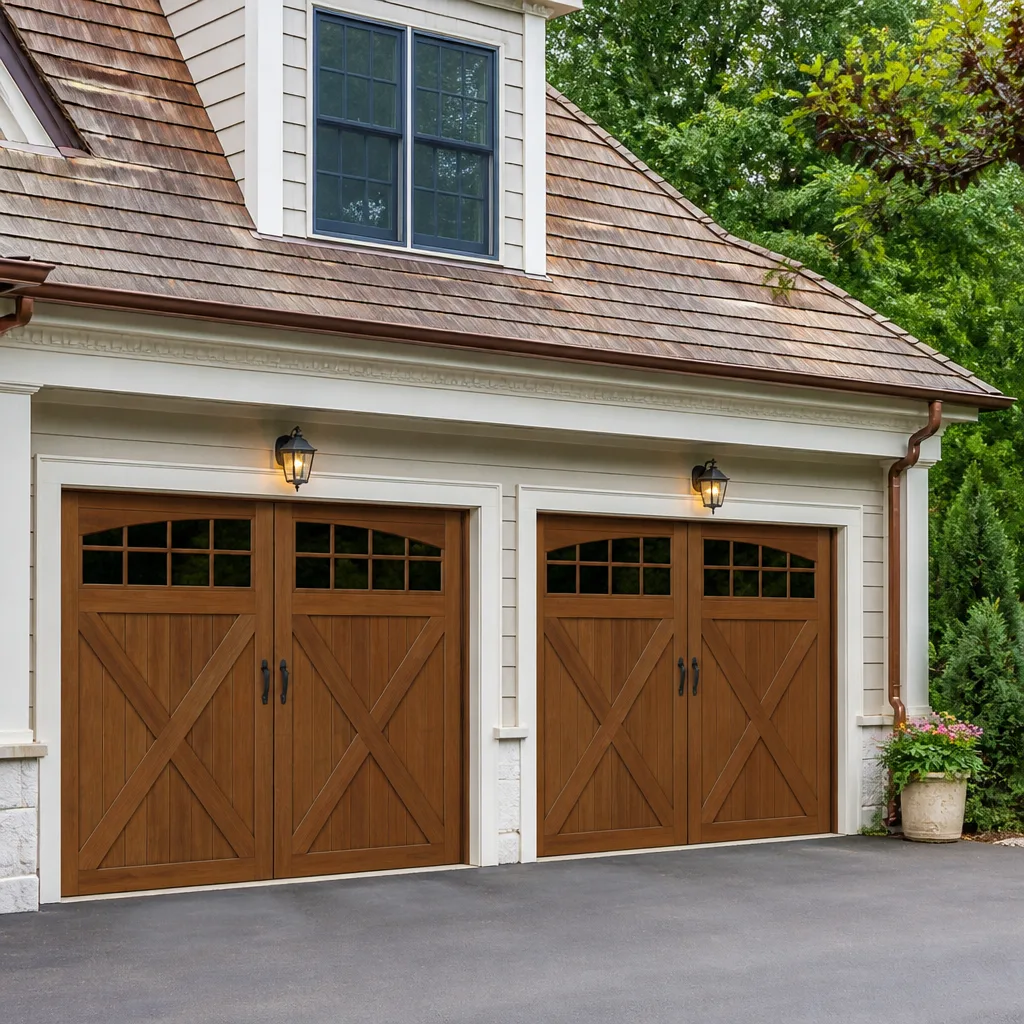 Carriage house
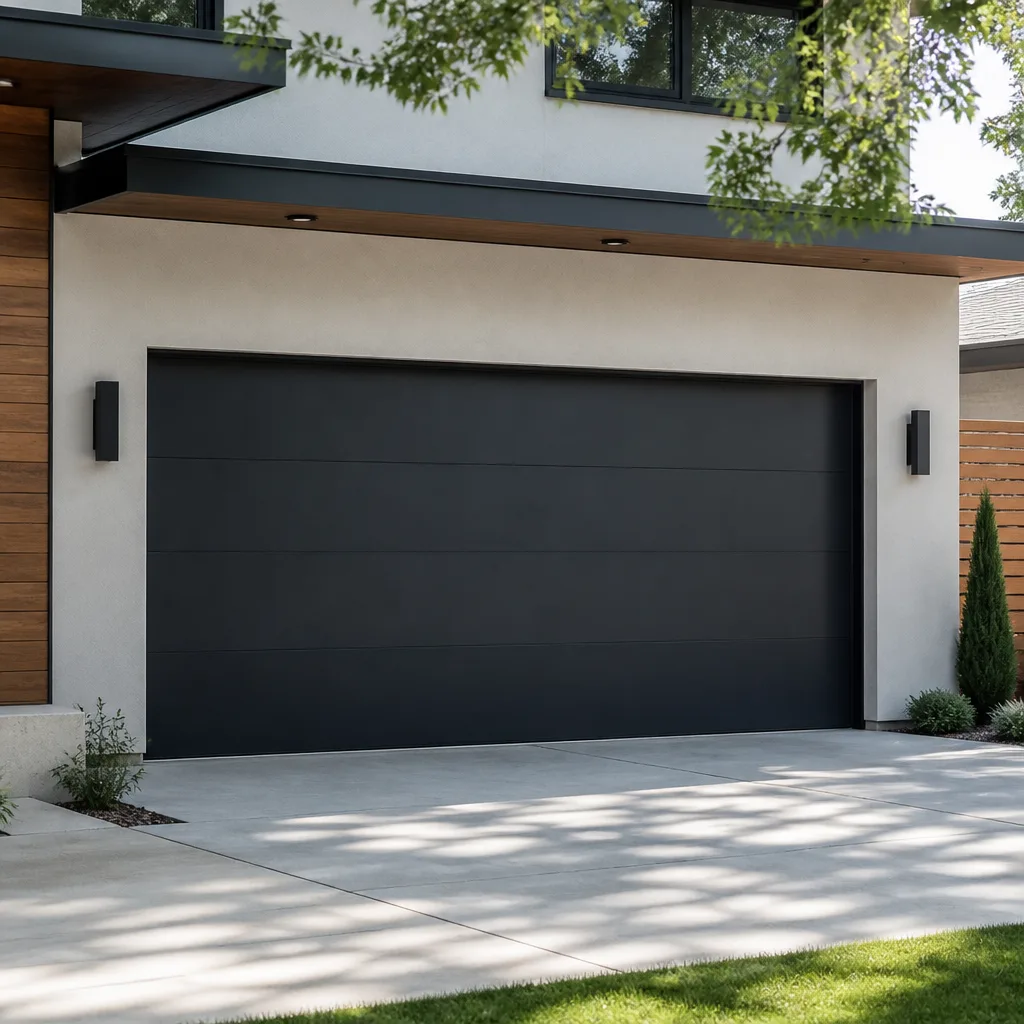 Modern flush
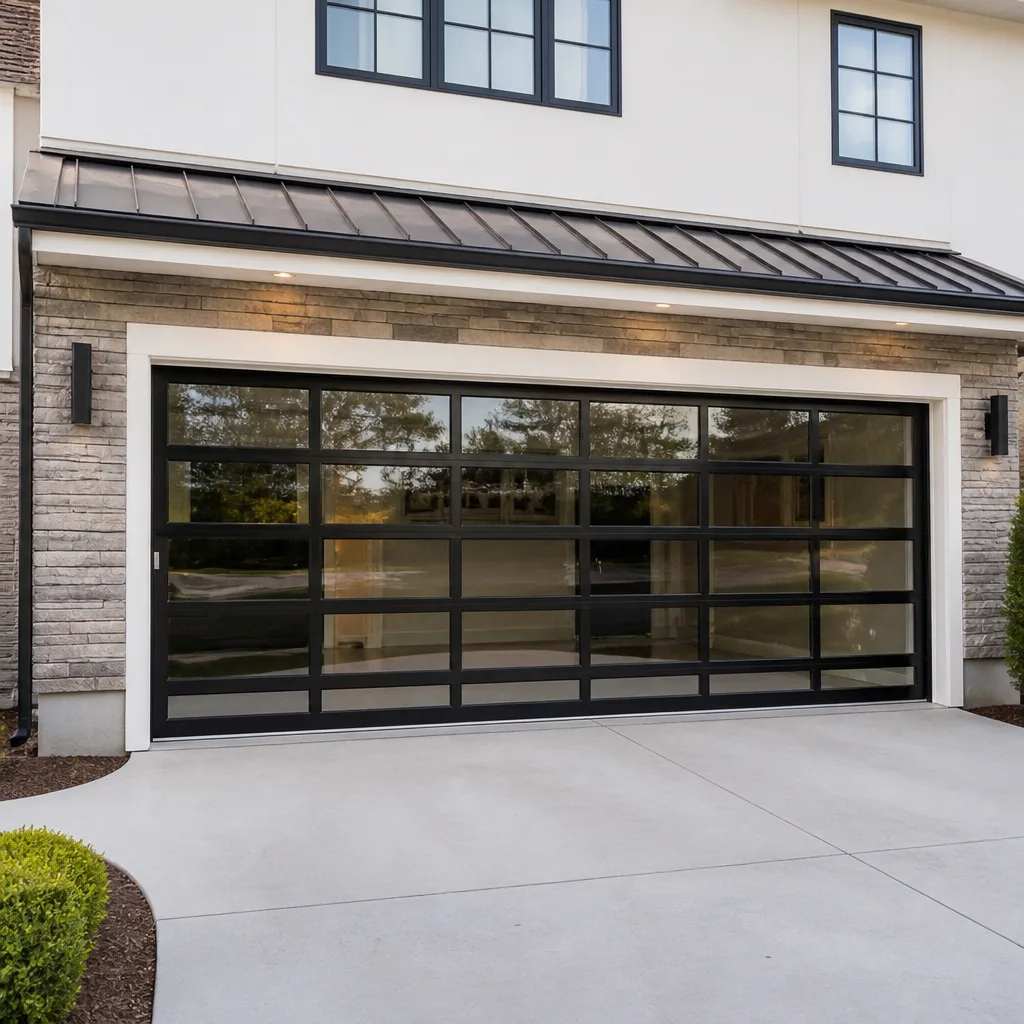 Full-view glass
 LiftMaster openers
 Chamberlain openers
Full 25-point door and opener safety check with every visit - springs, cables, rollers, tracks, and your LiftMaster or Chamberlain opener included
You get a price before we start. It does not change when the pro arrives.
Get your free estimateDIY vs Professional Garage Door: The Pittsburgh Homeowner’s Decision Guide
Most advice about garage doors splits into two useless camps: “never touch it, call a pro” or “it’s easy, watch a video.” Both miss the point. The real question isn’t whether you’re handy enough. It’s whether the specific task in front of you sits below or above a hard ceiling set by physics and liability. Cleaning and lubricating rollers, adjusting opener travel limits on most models, and replacing weather stripping are legitimate jobs that competent homeowners handle every year without incident. Replacing a torsion spring is a different category entirely. This guide draws that line task by task, with the local quirks of Pittsburgh garages in mind, so you know exactly where your DIY confidence is well placed and where it isn’t.
Quick Answer
Most garage door maintenance is safe DIY work, but spring, cable, and high-voltage opener repairs belong with a trained technician because the stored energy and electrical risk are real regardless of how handy you are. In Pittsburgh’s older garages, low ceilings and non-standard framing push even borderline projects toward professional help. For anything involving springs, call a professional: Tidewater Garage Door Repair offers free estimates in Pittsburgh at (844) 643-1812.
Styles & brands we work with
- Raised-panel steel
- Carriage house
- Modern flush
- Full-view glass
- LiftMaster openers
- Chamberlain openers
Table of Contents
- The DIY Ceiling: Which Garage Door Tasks You Can Actually Do
- The Spring Replacement Reality Check
- Why Pittsburgh’s Older Garages Change the Math
- Opener Work: Where DIY Gets Complicated
- What to Document Before You Call Anyone
- The Cost Math on DIY Garage Door Work in Pittsburgh
- Tools You’d Need vs. Tools a Technician Brings
- Safety Signals That Should Stop You Cold
The DIY Ceiling: Which Garage Door Tasks You Can Actually Do
The word “DIY” covers everything from wiping down a track to swapping a torsion spring, and treating those as the same risk level is where homeowners get hurt or waste money. Here’s the honest split we use when a Pittsburgh homeowner asks whether they should try something themselves.
Safe for most homeowners:
- Lubricating hinges, rollers, and tracks with a garage-door-specific lubricant
- Wiping tracks clean and checking for debris or bent sections
- Replacing bottom weather stripping and side seals
- Adjusting opener travel limits and force settings on most models (the manual tells you how)
- Testing the photo-eye safety sensors by waving an object in front of them
- Replacing remote batteries and re-pairing remotes
- Tightening visible bolts on hinges and brackets (never on springs or cables)
Borderline – depends on your tools and comfort:
- Replacing a single roller (the bottom roller often needs the door raised and supported correctly)
- Straightening a slightly bent track section
- Replacing opener wall buttons or wiring a new one to an existing low-voltage circuit
Above the ceiling – call a technician:
- Torsion spring replacement (the spring above the door)
- Extension spring replacement (the springs running along the tracks)
- Cable replacement or re-spooling
- Panel replacement on a door with torsion springs
- Opener motor, capacitor, or logic board repair
- Any work on the door’s structural framing
The reason the line falls where it does isn’t skill. It’s the amount of stored energy and the number of ways a mistake can hurt you or someone else. A homeowner can be very capable and still not own the winding bars, clamps, and door supports that make spring work safe. That’s the ceiling.
The Spring Replacement Reality Check
A torsion spring on a standard residential door holds enough stored energy to lift the door’s weight many times over. When it’s under tension, releasing that energy incorrectly can break bones or worse. This isn’t a liability disclaimer; it’s the mechanical reality of what those coils are doing every second the door is closed.
Here’s what actually happens during a spring replacement that most DIY videos skip:
- The door must be fully supported before the spring is touched. A torsion spring holds the door’s entire weight. Release the spring without proper support and the door comes down.
- The spring must be wound with the correct number of turns for that door’s weight, drum size, and cable length. Get it wrong and the door either won’t lift or drops too fast.
- The winding bars must be sized correctly and inserted to full depth. A bar that slips out of a wound spring under tension is a projectile.
- The cables must be re-spooled and seated in the drums properly or the door will bind and warp.
For a Pittsburgh homeowner with a garage door, this work lands in a category of its own. Electricians will tell you not to open a panel. Roofers will tell you not to walk a steep pitch. Spring replacement is the garage door equivalent: the task is doable by someone with the right tools and training, but the failure mode is severe enough that doing it yourself to save money is rarely worth the risk. This is where Tidewater’s technicians spend most of their time, and where the up-front diagnosis matters more than the repair itself.
Why Pittsburgh’s Older Garages Change the Math
Garage doors in Pittsburgh’s older neighborhoods are not the doors you’ll see in a new-build subdivision. The housing stock here skews old, and the garages reflect it. Those older garages create complications that turn borderline DIY projects into professional territory.
Common issues we see across Pittsburgh:
- Low ceilings. Many garages in older Pittsburgh homes have tight headroom, which makes winding a torsion spring or working around an opener rail harder and more dangerous. Some doors are low-headroom or rear-mount setups that need specific spring configurations.
- Non-standard door widths and heights. Replacement panels, springs, and openers must be sized to the actual opening, not a catalog standard. Old doors don’t always match off-the-shelf parts.
- Aging framing. The wood header and jambs around older Pittsburgh garage doors can be soft, out of square, or showing rot. A new spring or opener installed on failing framing doesn’t last.
- Single-car garages with unusual tracks. Many Pittsburgh homes have narrow single-car garages that limit the space you need to safely work around the door.
- Older opener models. Craftsman and Raynor openers from previous decades are still in service across Pittsburgh. Their parts and adjustment procedures differ from current models, and a homeowner’s generic video may not apply.
Those aren’t reasons to avoid DIY entirely. They’re reasons to know your specific garage before you start. If you’re not sure what kind of spring setup you have, or if your ceiling is unusually low, the safe move is to have a technician look first. Our technicians have up to 12 years of experience with the complications older Pittsburgh garages present.
Opener Work: Where DIY Gets Complicated
Opener repair is where a lot of homeowners assume they’re fine because the work “isn’t the spring.” That’s partly true and partly not. It depends on the specific task.
Safe for most homeowners:
- Resetting a tripped breaker or checking the outlet the opener is plugged into
- Re-pairing a remote or keypad following the manual
- Adjusting travel limits and force settings
- Testing the safety sensors and realigning them if they’ve been bumped
- Replacing a wall button on an existing low-voltage circuit
Needs a technician:
- Replacing a capacitor or logic board inside the opener housing
- Motor replacement or gear and sprocket repair
- Replacing the belt, chain, or screw drive
- Diagnosing why a door reverses intermittently
- Installing a new opener from scratch
The complications crop up when a lift that “just needs adjusting” is actually a sign of a failing logic board, a worn gear, a bound track, or a weak spring the opener is struggling against. That’s why brand familiarity matters. LiftMaster openers have specific travel and force adjustment menus that differ from Genie or Chamberlain units, and older Craftsman and Raynor models can behave in their own ways. A generalist trying to adjust a Chamberlain the way they’d adjust a Genie can make the problem worse. Our garage door opener repair work is where the brand-specific knowledge often makes the biggest difference, and where a correct diagnosis saves an unnecessary replacement.
One important note: if a homeowner isn’t comfortable working around a live circuit inside the opener housing, don’t. The opener is wired to household current, and the risk isn’t worth it for a part swap that a technician can finish safely.
What to Document Before You Call Anyone
Here’s where DIY-minded homeowners can save themselves real money: documentation. When a professional does need to come out, a homeowner who has already gathered the right information cuts the diagnosis time and often the cost.
Photograph and note these before your call:
- The door from the outside and inside, both fully closed and fully open. A photo of the inside of the door, open, shows the spring, drums, cables, and opener rail all at once.
- A close-up of the spring(s) with any visible markings or a paint stripe. The paint code tells a technician the spring’s capacity without measuring.
- The opener’s brand and model sticker. These are usually on the back of the motor housing or inside the light cover. LiftMaster, Chamberlain, Genie, and Craftsman all have identifiable model numbers.
- The door’s manufacturer label, often on the inside of a panel near the bottom or the hinges. Clopay, Amarr, Wayne Dalton, and Raynor all mark their doors.
- The symptom in plain language: “the door reverses halfway up,” “the opener runs but the door doesn’t move,” “there’s a loud bang,” “the door closes and the motor keeps running.”
- Any recent changes: new remote, new wall button, new weather seal, recent storm, recent garage clean-out, or the opener was unplugged.
- The garage’s ceiling height and door width, roughly. A quick tape measure helps the technician know what they’re walking into.
We ask for this information because it lets us arrive with the right parts and the right expectation. A homeowner who says “it’s a Wayne Dalton door with a LiftMaster opener and the door stops about a foot off the floor” gets a faster, more accurate outcome than a homeowner who says “it’s broken.” The garage door repair side of our work is where the documentation pays off most directly.
The Cost Math on DIY Garage Door Work in Pittsburgh
Homeowners understandably want to know where they save money doing it themselves and where they don’t. Here’s the honest breakdown, expressed as ranges for typical Pittsburgh jobs. Actual prices depend on the specific door and will be set by a written estimate.
Where DIY saves real money:
- Lubrication and cleaning: essentially free in materials, no risk of a botched repair
- Weather stripping replacement: a few dollars in materials and a reasonable afternoon project
- Remote and keypad programming: no cost beyond a fresh battery
- Opener travel limit adjustment: a manual and a few minutes, no parts needed
- Sensor alignment: no cost
Where DIY costs more after a failed attempt:
- Spring replacement. A typical single-spring replacement in the Pittsburgh market runs roughly $180 – $340 installed. A homeowner who attempts it and fails may end up paying for the damaged spring, bent door panels, or a re-spooling job on top of the original repair, plus the original labor. A matched pair should be expected to run about double the single-spring range, since both usually get replaced together.
- Cable and drum work. A mis-spooled cable can bend the door panels, and straightening panels is usually more expensive than the original cable replacement.
- Opener motor or logic board. A part swap on a unit with a hidden secondary failure means paying twice. A brand-familiar diagnosis avoids this.
- Track replacement. A misaligned track often damages rollers, hinges, and the door’s balance, turning one job into three.
The pattern is that small, low-risk jobs are genuinely cheaper done yourself. Repairs with any stored energy or high-value part involved tend to cost more when a DIY attempt fails, not less. For a wider picture of service ranges across the city, our Pittsburgh service area page covers the common jobs and typical costs.
Tools You’d Need vs. Tools a Technician Brings
The tool list is a practical shortcut. If you don’t already own the tool, you probably shouldn’t be doing the task.
DIY-safe tasks require:
- A socket or wrench set
- Garage door lubricant
- A step ladder
- The opener’s manual
- A screwdriver
Spring, cable, and opener-internals work requires:
- Winding bars sized specifically for the spring
- A proper door support (clamps, C-clamps, or a door stand)
- Vice grips for locking the track
- Cable pull tools and a way to re-spool drums safely
- A meter for electrical diagnosis on the opener
- Manufacturer-specific parts and spring sizes, matched to the door’s weight
Most homeowners don’t own winding bars, and the ones sold online aren’t all correctly sized. A technician arrives with the matched spring, correct bars, proper door support, and the diagnostic parts for the specific opener. That’s not a sales pitch; it’s the reason the job goes faster and without the risk of a slip.
Safety Signals That Should Stop You Cold
If any of these are true, stop and call a technician:
- You hear a loud bang and the door stops responding. That’s almost always a broken torsion spring. The door becomes very heavy and dangerous to operate manually. Do not try to lift it.
- The door has separated at a hinge or a panel is bent and catching. Operating the door can cause the panel to crumple or the door to come off track while you’re under it.
- The opener won’t stop running when the door is closed. This usually means the limit switch or logic board has failed, and the motor is fighting the door.
- The door reverses on its own with nothing in the path. This can mean the sensors, wiring, or opener board is failing.
- You can see a cable off its drum or hanging loose. Never try to re-seat a cable under tension.
- The garage framing or the door’s vertical tracks are loose, cracked, or rotted. Any new part installed on failing framing won’t hold.
- You’re working alone, on a ladder, at night, or in a tight garage. Any of these takes away your margin for error.
These are the situations where Tidewater Garage Door Repair gets most of its same-day calls. The homeowner was doing fine with maintenance and then something failed in a way that clearly crossed the line.
Common Mistakes to Avoid
- Assuming “it’s just a spring.” A broken torsion spring is a serious mechanical failure, not a hardware swap. Attempting it without winding bars and door support is the single most common reason homeowners end up calling a technician under less safe conditions than they would have otherwise.
- Adjusting travel limits without understanding the cause. If the door reverses at the same spot every time, the issue may be a bound track, a misaligned photo eye, or a failing logic board, not a travel setting. A wrong adjustment can hide a real problem.
- Tightening bolts on the spring brackets. It’s tempting to snug a bolt that looks loose, but the spring brackets carry the winding tension and shouldn’t be adjusted by a homeowner. If you see a loose bracket, call.
- Using WD-40 or generic grease on rollers and tracks. Standard WD-40 isn’t a garage door lubricant. It attracts dirt and leaves tracks gummy. Use a garage-door-specific lubricant for any routine maintenance.
- Ignoring the Pittsburgh weather. Pittsburgh winters bring freeze-thaw cycles that work on door seals and framing. A weather seal that’s torn and letting in moisture makes the frame age faster, and a homeowner who waits until spring may be dealing with rot as well as a replacement.
- Buying a replacement opener or door from a big-box store without measuring the opening. Older Pittsburgh homes often have non-standard openings. A door that’s a half-inch off won’t install safely, and a homeowner has already paid for it.
- Attempting repairs on an unfamiliar older opener model. Craftsman and Raynor units from previous decades are still in service across the city, and their adjustment procedures differ from current models. A universal video won’t always be accurate.
See the difference
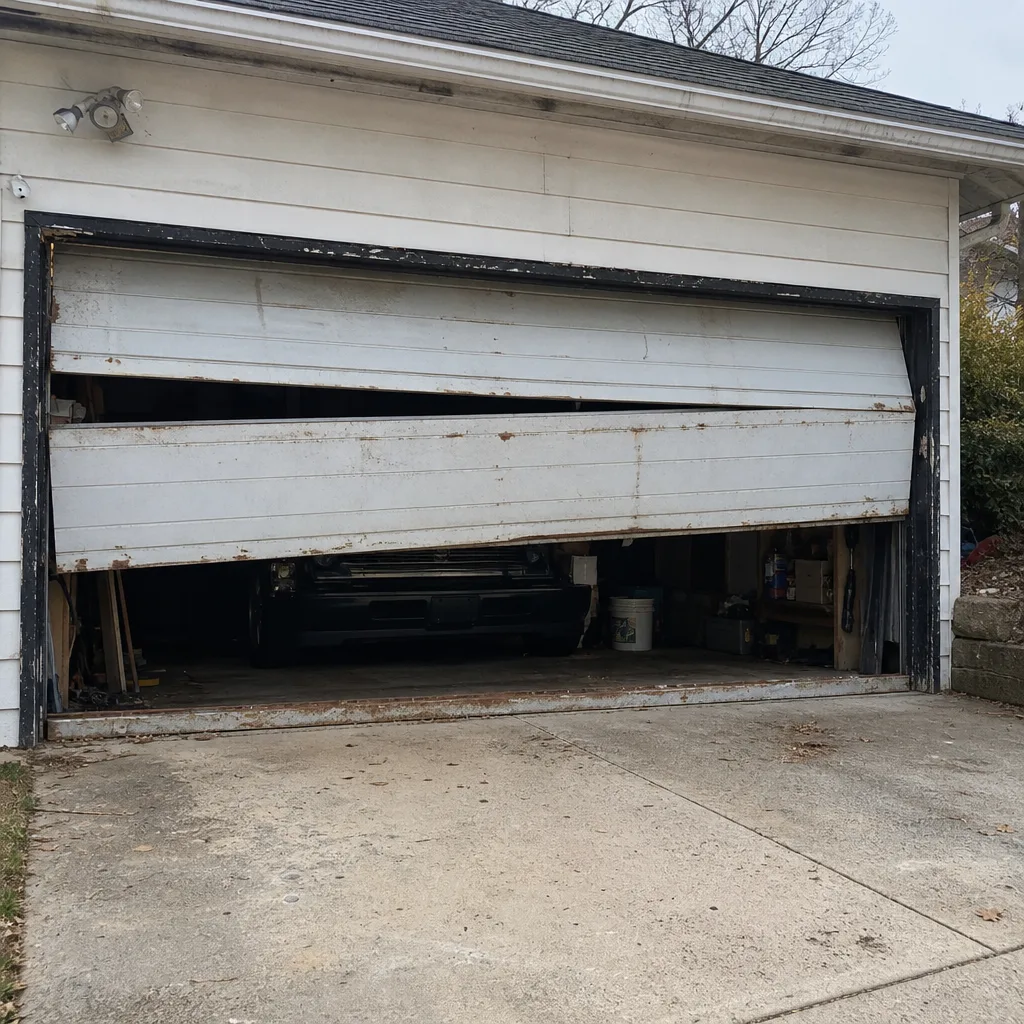 Before
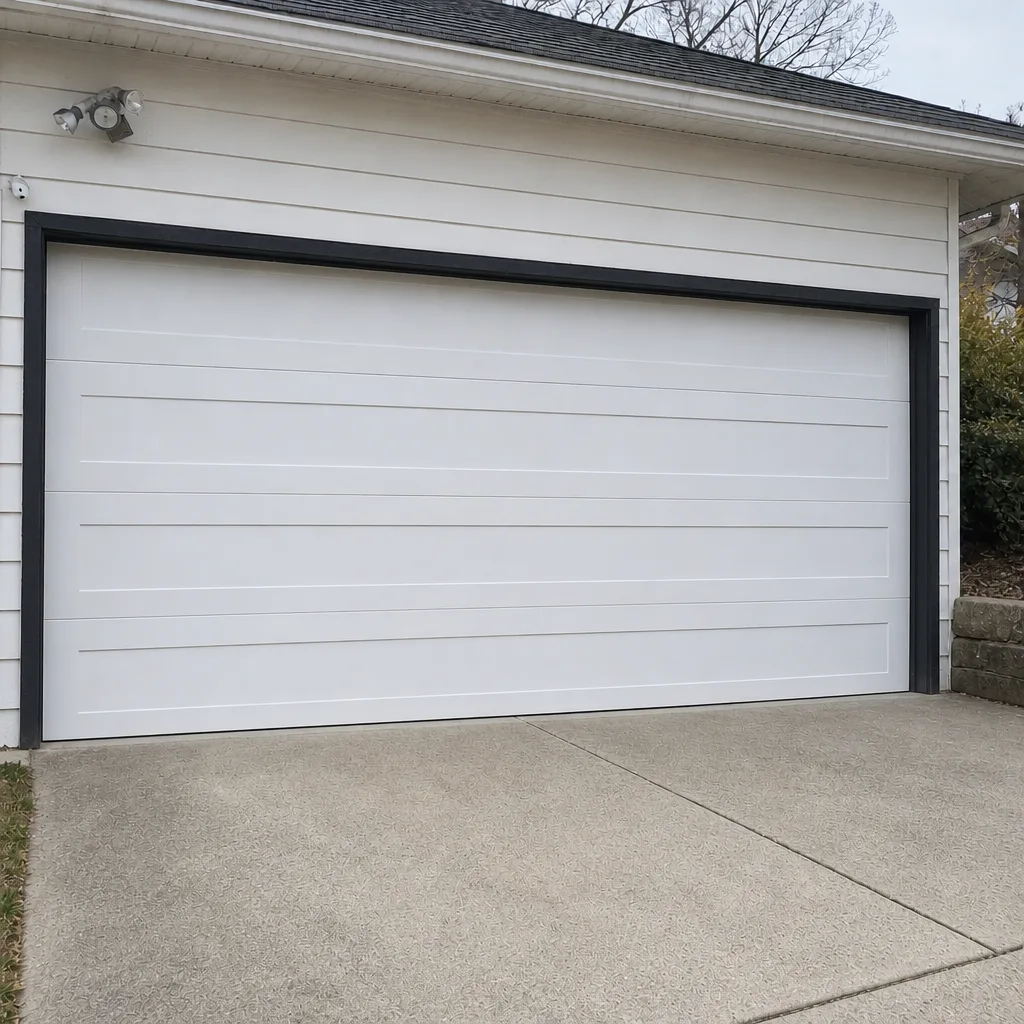 After
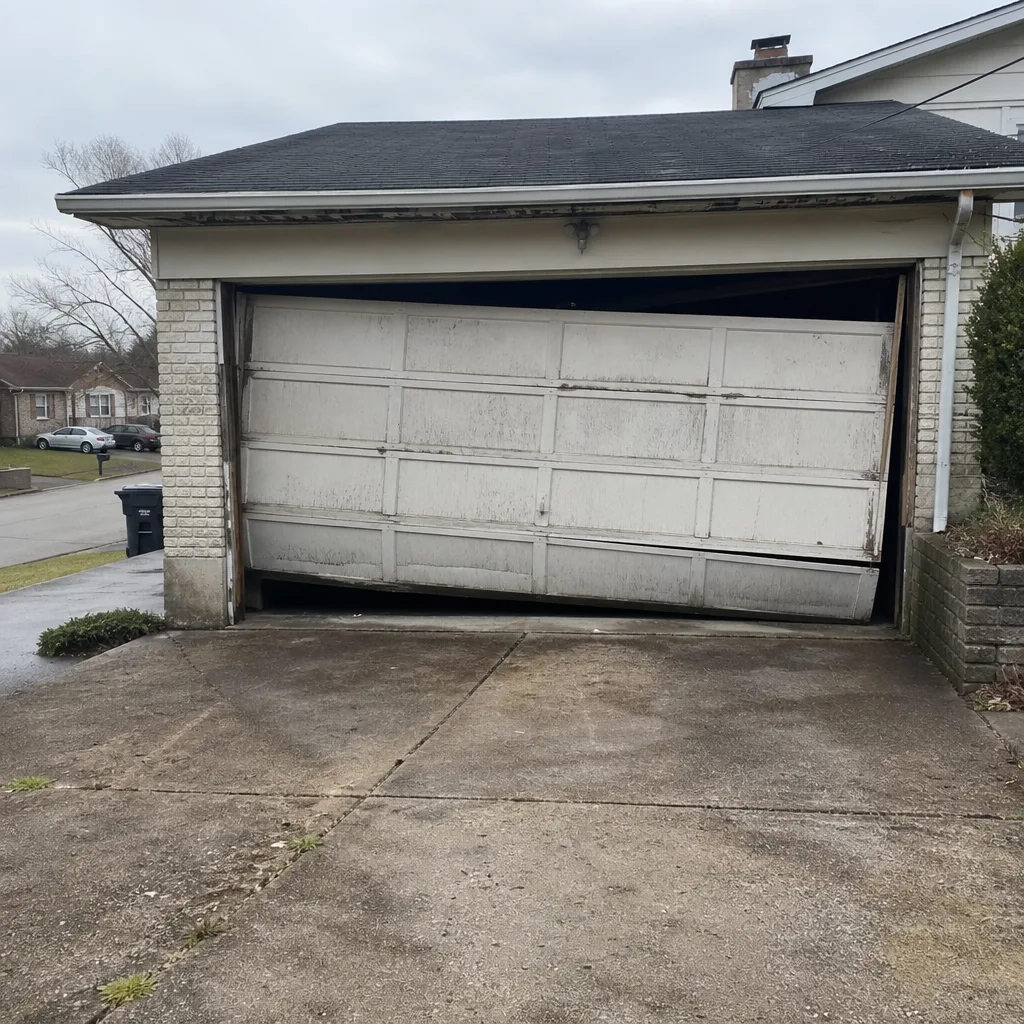 Before
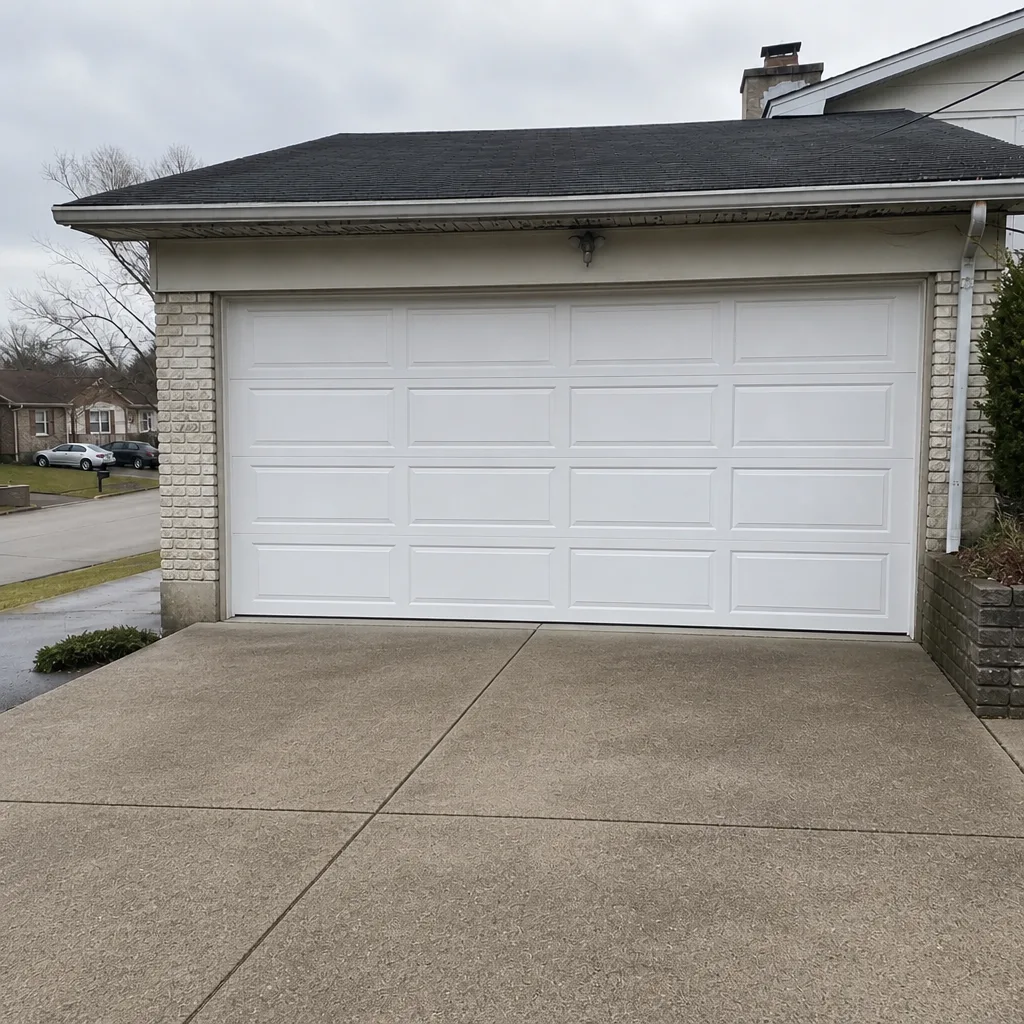 After
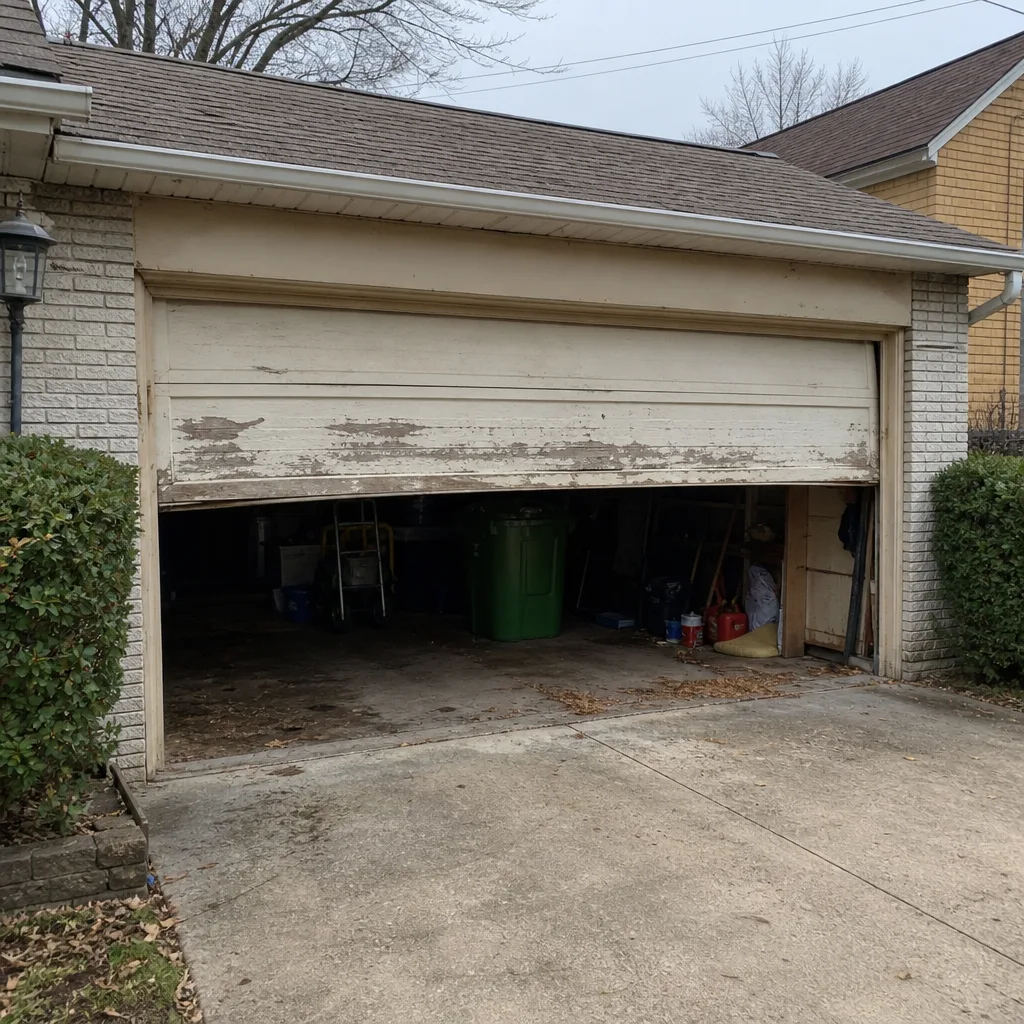 Before
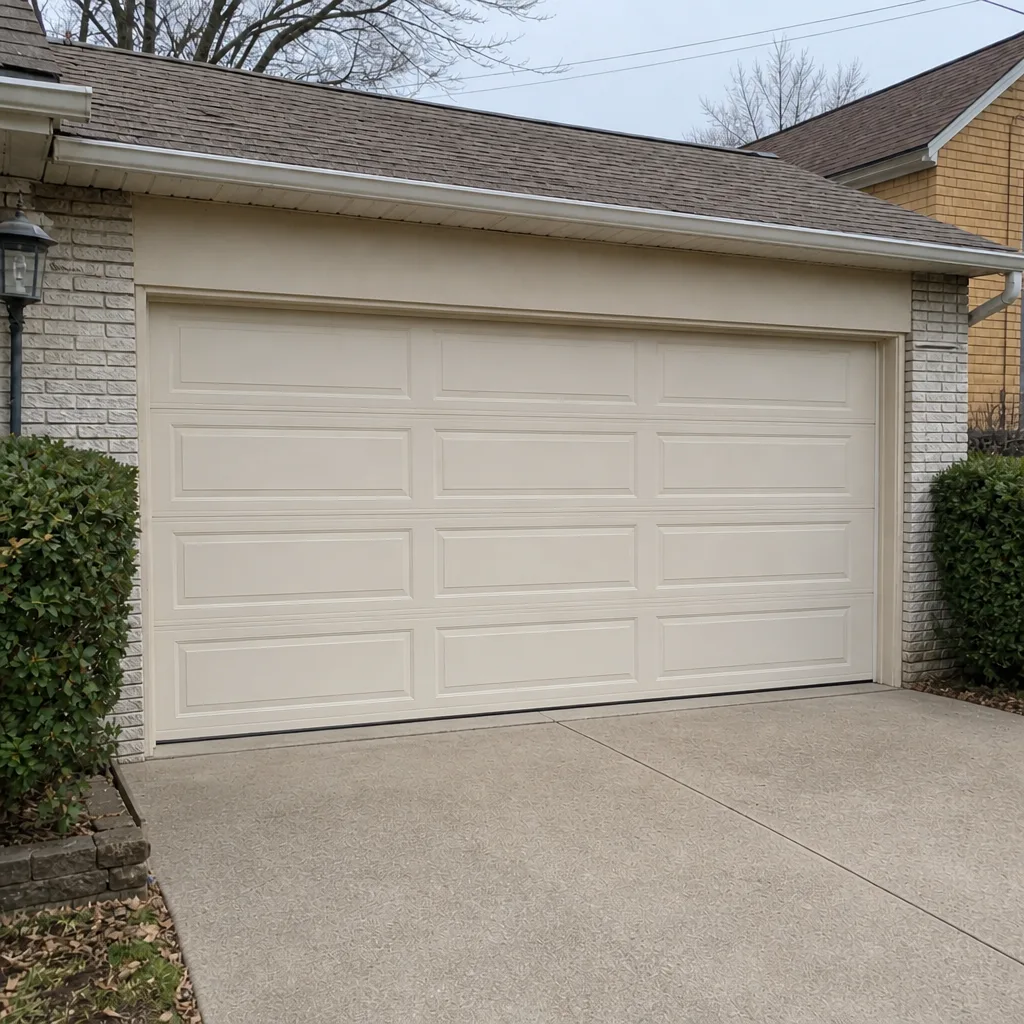 After
When to Call a Professional
Call a professional for anything involving springs, cables, the door’s structural framing, or the internal electronics of the opener. Call us if the door suddenly becomes very heavy to lift, if you hear a loud bang from the garage, if the door has come off the tracks, or if a panel is bent and catching on the frame. Call if the opener runs without moving the door, reverses without a visible obstruction, or makes grinding noises. In a Pittsburgh home with an older garage, call if the framing looks soft or the opening isn’t standard. Tidewater Garage Door Repair offers free estimates in Pittsburgh, and our technicians have up to 12 years of experience across LiftMaster, Chamberlain, Genie, Craftsman, Clopay, Amarr, Wayne Dalton, and Raynor. Call (844) 643-1812. We answer 24/7. Fast dispatch from 7am to 7pm, Sunday through Friday.
Frequently Asked Questions
You can physically do it, but it’s not recommended, and the risk is real regardless of how handy you are. The torsion spring holds the door’s full weight under tension, and the winding procedure requires specific bars, door support, and knowledge of the correct number of turns. A failed attempt can injure you or damage the door in ways that cost more to fix than the original repair. Call (844) 643-1812 for a free estimate on spring replacement.
Typical single-spring surgery runs about $180 – $340 installed, with a matched pair usually replaced together at roughly double the single-spring price. Opener repairs and panel repairs vary by the specific job. All prices depend on the door, the opener, and whether the surrounding framing needs attention. The written estimate sets the final price before any work begins, and there’s no charge for the estimate. Call (844) 643-1812 for an exact quote.
We’re closed on Saturdays. We’re open Sunday through Friday, 7am to 7pm. If a door fails and you call, we can book you into the next available opening in that window. Call (844) 643-1812. We answer 24/7.
Sometimes. Check first whether the emergency release is pulled (the rope handle hanging from the opener rail), whether the door is locked, and whether the tracks are clear. If those are fine and the opener still runs without moving the door, the issue is usually inside the opener: a stripped gear, a snapped chain or belt, or a failed logic board. That’s technician work. Call (844) 643-1812 for opener repair.
Lubricate hinges, rollers, and tracks every few months with a garage-door-specific lubricant. Wipe tracks clean and look for bent sections. Test the photo-eye sensors monthly. Test the opener’s auto-reverse by placing a piece of wood flat on the floor in the door’s path and confirming the door reverses. Check weather stripping for tears and replace it when it starts letting in air or water. All of these are safe homeowner tasks.
Often, yes. Non-standard door widths, low ceilings, and aging framing are common in Pittsburgh’s older homes. A standard spring size or opener model won’t always fit, and a replacement part has to be matched to the actual door. That’s why a technician photographs and measures before quoting a repair, rather than assuming a standard size. Call (844) 643-1812 and we’ll ask the right questions before the visit.
The written estimate we give you before work begins is the price for that work. If we discover something that changes the scope, for example, the framing needs repair before a new spring can be safely installed, we’ll explain the additional work and the added cost before touching anything. You decide whether to proceed. The price you approve is the price you pay.
The Bottom Line
The DIY line on garage doors isn’t about whether you’re capable. It’s about which tasks have a physical ceiling. Lubrication, weather stripping, sensor checks, remote pairing, and travel limit adjustments are safe DIY work that any careful homeowner can do. Springs, cables, opener internals, and structural framing are above that ceiling because the stored energy and the failure mode are severe. In Pittsburgh’s older garages, the low ceilings and non-standard openings push a lot of borderline projects into professional territory. Document your door and opener well when you do need help. And remember that failed attempts usually cost more than the original repair would have. When a task crosses the line, call (844) 643-1812 for a free estimate from Tidewater Garage Door Repair. We work on your brand, diagnose before we replace, and stand behind steady service you can count on.
Written by the team at Tidewater Garage Door Repair.