
Last updated November 15, 2026
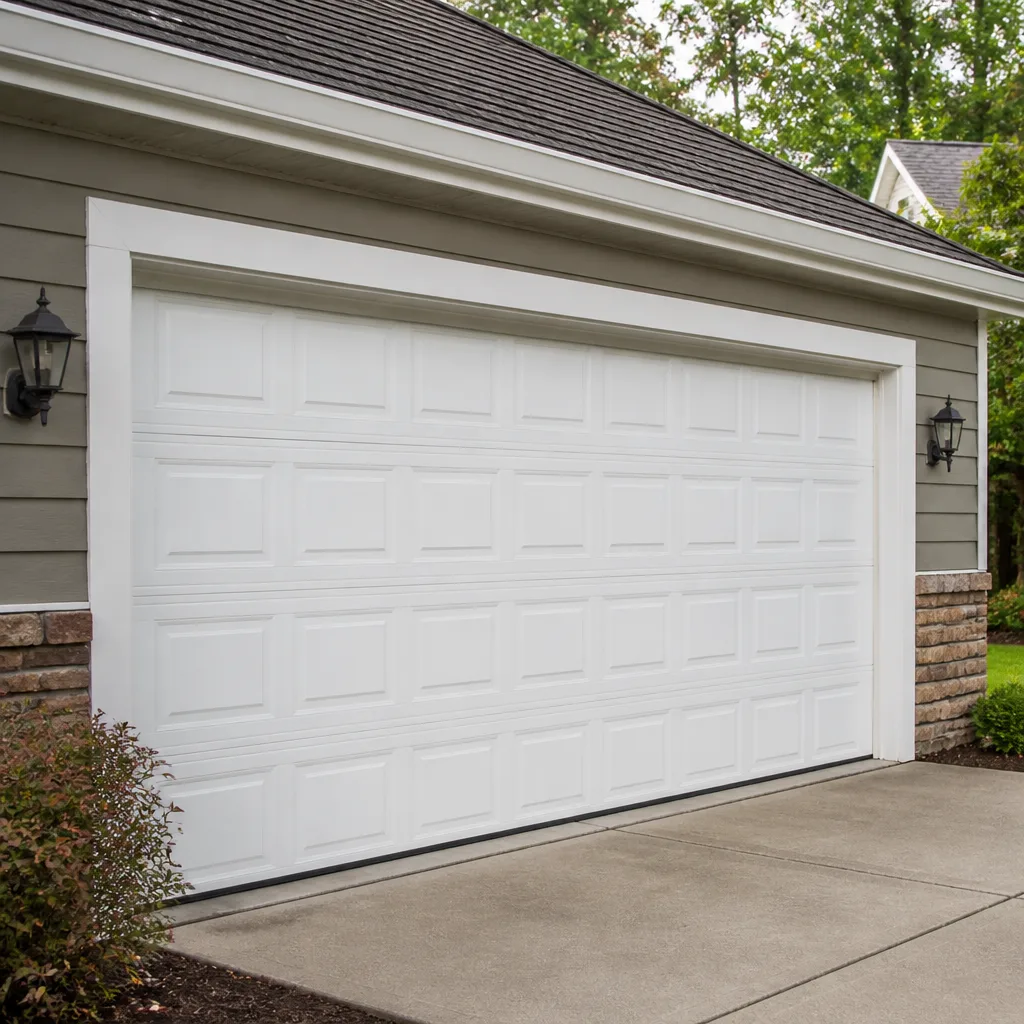 Raised-panel steel
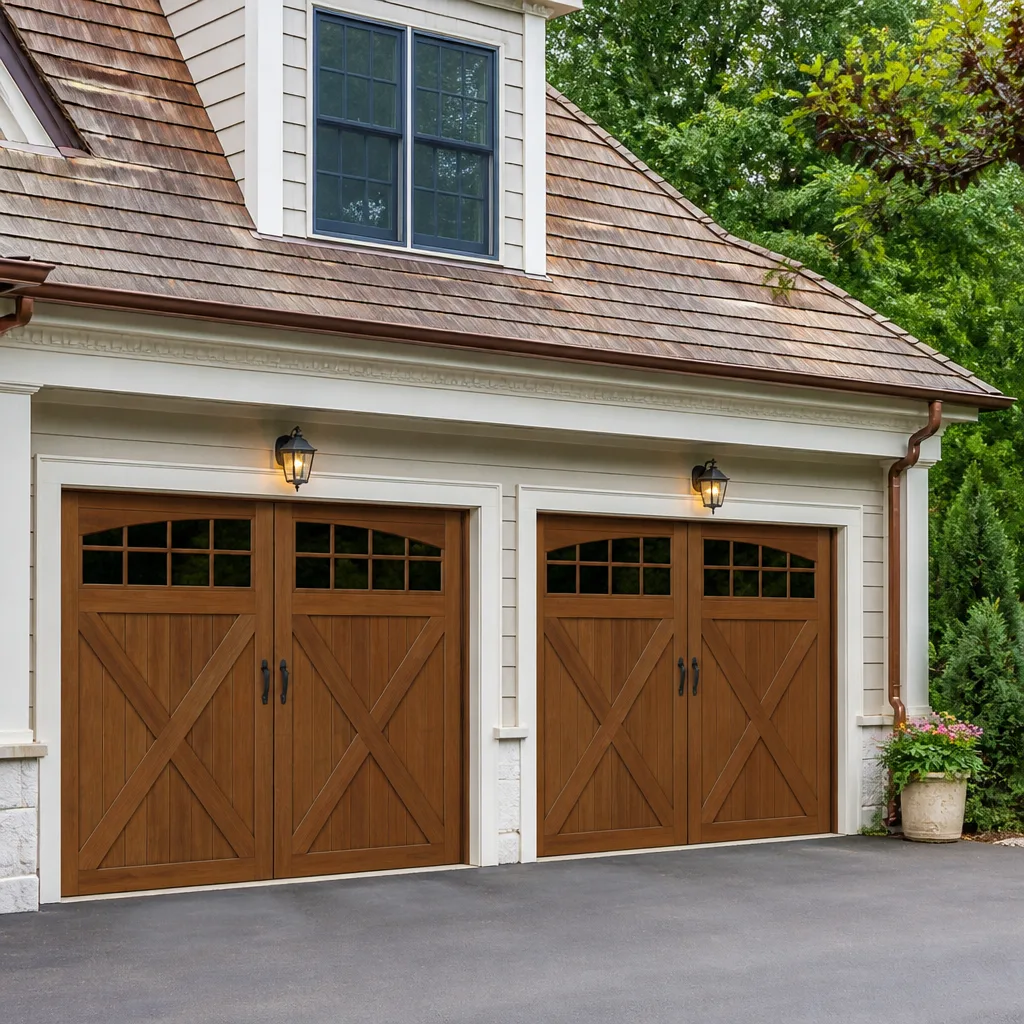 Carriage house
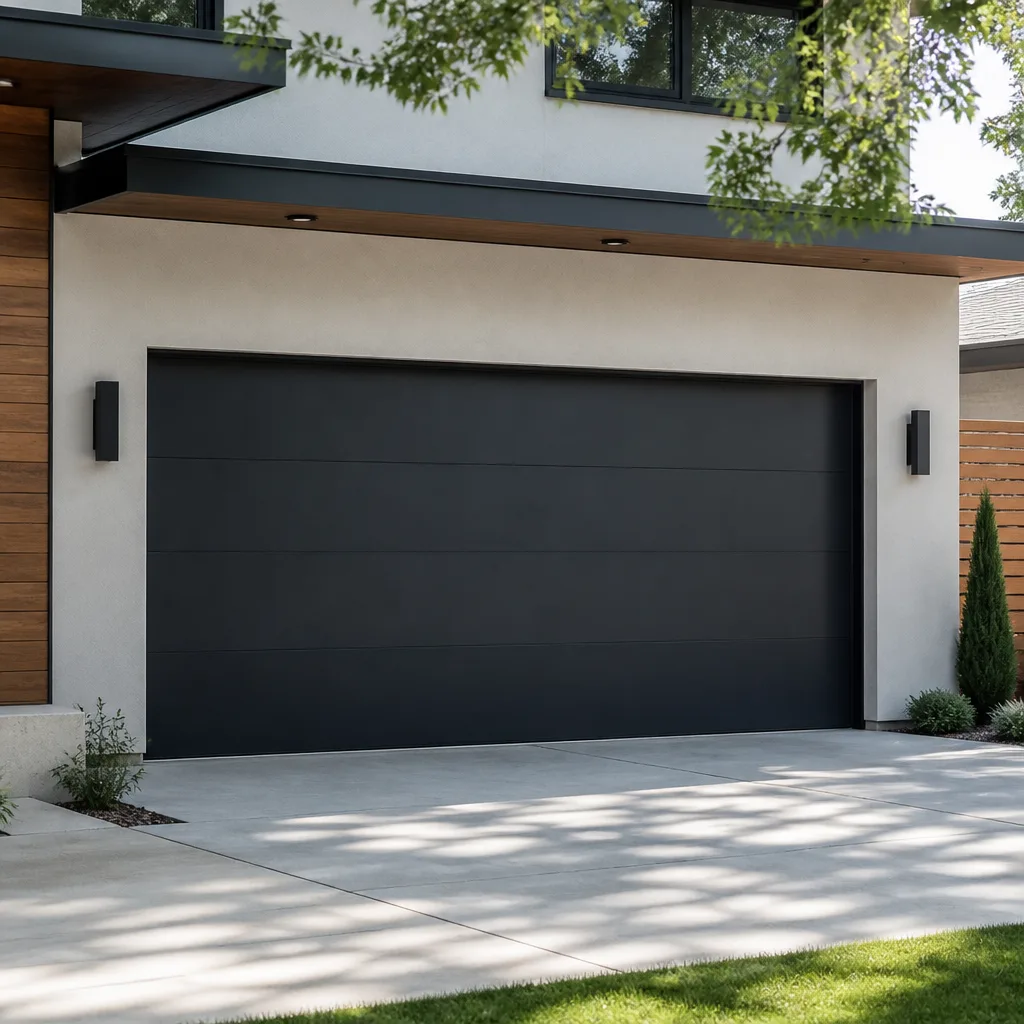 Modern flush
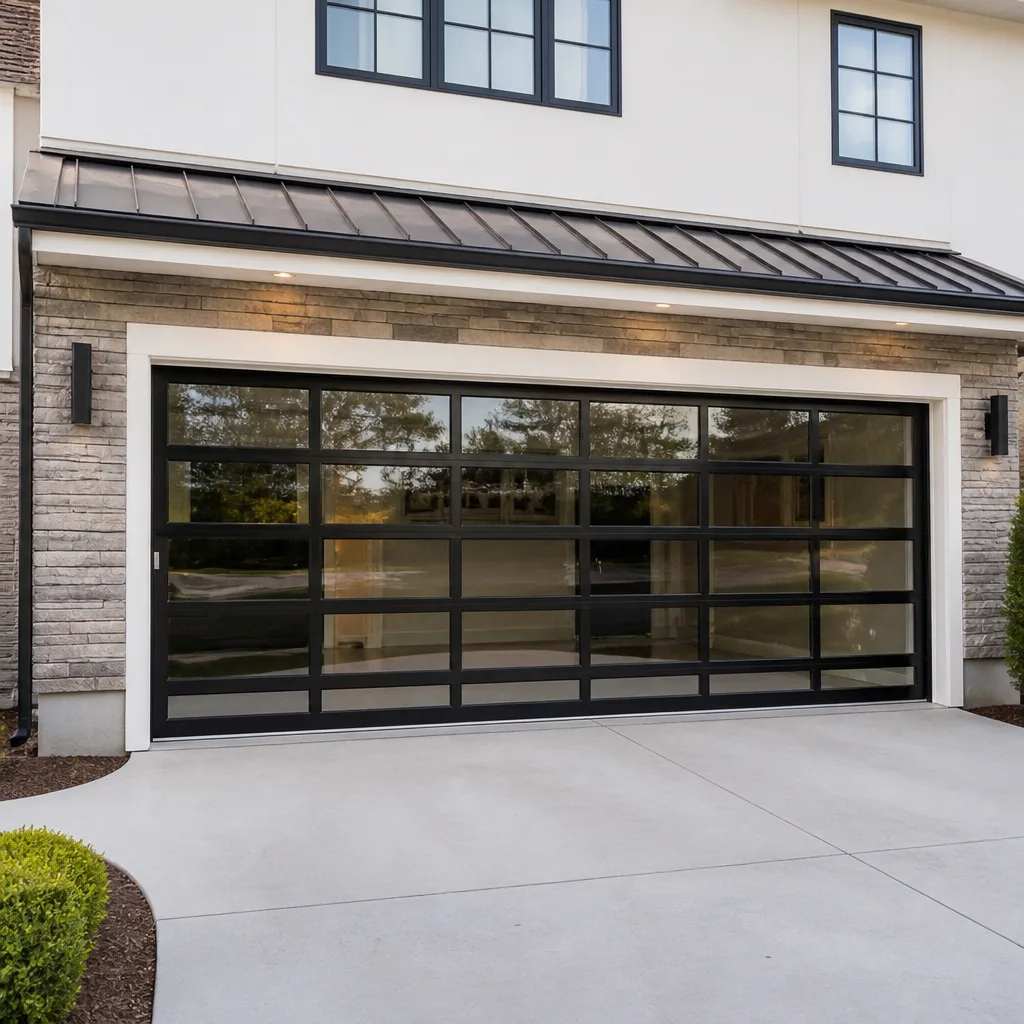 Full-view glass
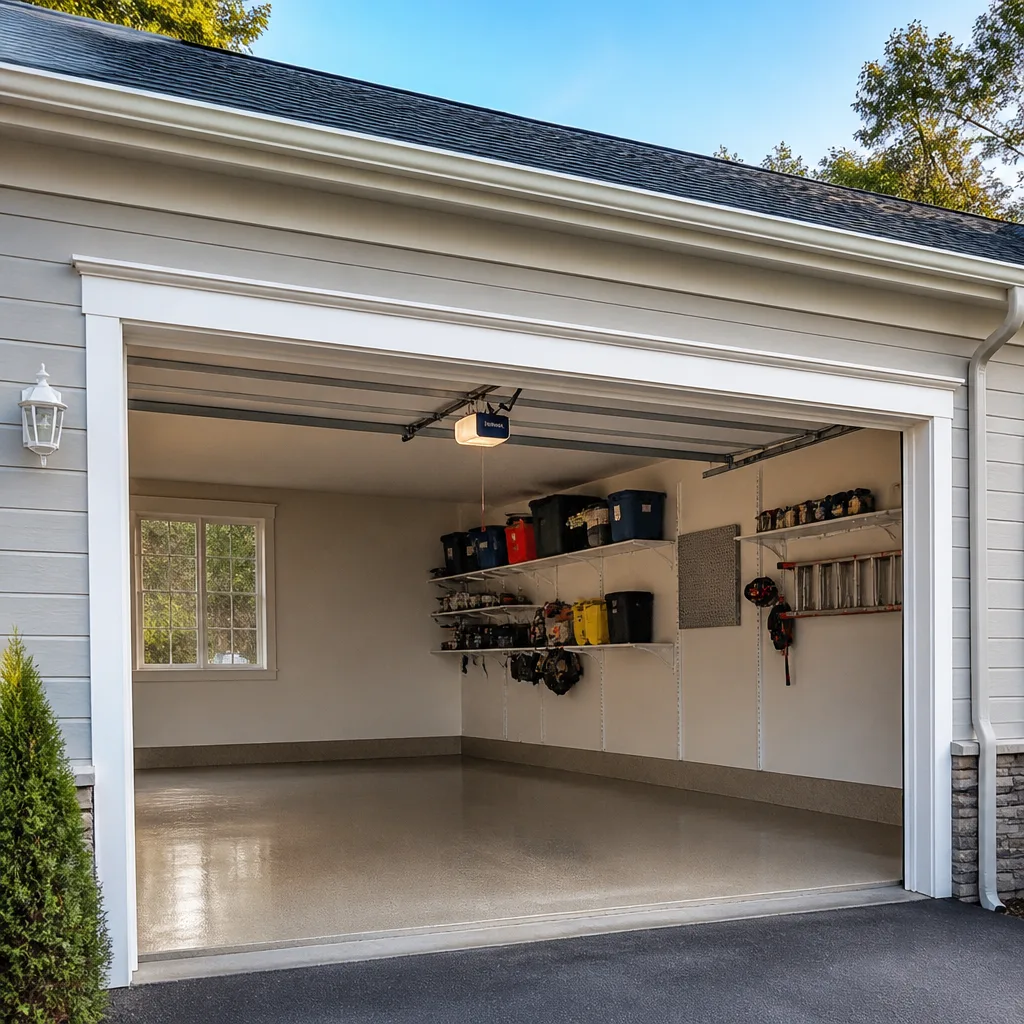 LiftMaster openers
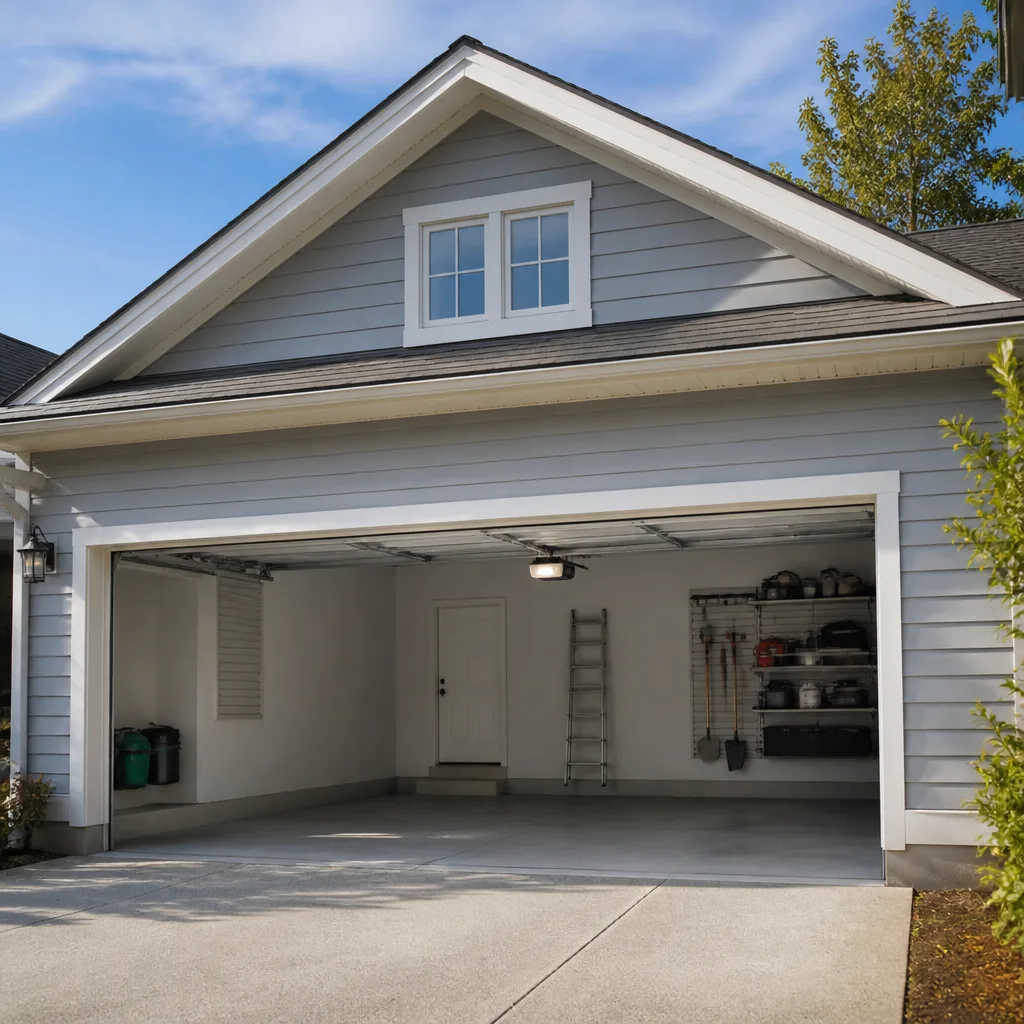 Chamberlain openers
Full 25-point door and opener safety check with every visit - springs, cables, rollers, tracks, and your LiftMaster or Chamberlain opener included
You get a price before we start. It does not change when the pro arrives.
Get your free estimateHow to Hire a Garage Door Contractor in Pittsburgh: A Step-by-Step Guide
A contractor who bids your job in under five minutes without measuring spring tension, checking track alignment, or asking what brand opener you have is already planning to replace parts that may not need replacing. That’s the uncomfortable truth about hiring garage door help in Pittsburgh: the reviews and the price tag tell you almost nothing about whether the person standing in your driveway can actually diagnose your door. Two questions separate the technicians who fix from the technicians who swap: brand-specific training, and how they handle a job they can’t solve on the spot. This guide walks you through both, plus the five technical questions, the on-site inspection you should expect, how Pennsylvania licensing works, and the red flags that should end the conversation.
Quick Answer
To hire a garage door contractor in Pittsburgh, verify state licensing, ask five technical questions about brand familiarity, spring testing, and diagnosis, and demand a written quote that separates parts from labor before any work begins. A qualified technician inspects the door before quoting, explains what failed and why, and matches parts to your existing hardware rather than defaulting to full replacement. If the bid comes before the inspection, walk away.
Styles & brands we work with
- Raised-panel steel
- Carriage house
- Modern flush
- Full-view glass
- LiftMaster openers
- Chamberlain openers
Table of Contents
- The Five Technical Questions to Ask Before Accepting Any Bid
- How to Verify Brand-Specific Training (and Why It Matters)
- What a Proper On-Site Diagnosis Looks Like
- How Pittsburgh Contractor Licensing Works for Garage Door Work
- Red Flags in Garage Door Quotes
- What Garage Door Work Typically Costs in Pittsburgh
- Pittsburgh Winters, Hillside Driveways, and Older Housing Stock
- Why Spring and Cable Work Isn’t a DIY Job
The Five Technical Questions to Ask Before Accepting Any Bid
These five questions force a contractor to demonstrate knowledge instead of reciting a sales script. A qualified technician answers each one specifically. A vague answer on two or more is your signal to keep calling around Pittsburgh.
- “What brand is my opener, and what’s the most common failure on that model?” A technician who works on your brand will name it back to you without squinting at the label. If your opener is a LiftMaster or a Chamberlain, they should recognize the rail, the trolley, and the logic board layout on sight. If they say “they’re all about the same,” they don’t know your equipment.
- “Will you check spring tension and balance before quoting?” A balanced door should hold roughly halfway open when you let go. A tech who skips this test can’t tell whether you need one spring or a matched pair, and may quote the wrong part entirely.
- “What failed, exactly, and how do you know?” The answer should describe a specific component: a snapped torsion spring, a frayed cable, a misaligned track, a failed safety sensor, a burned-out logic board. “The whole door is worn out” is not a diagnosis.
- “Are the replacement parts OEM or aftermarket, and does it matter for my model?” On a Raynor or a Craftsman door, the answer matters. Generic springs and rollers can fit but wear differently. A real technician explains the tradeoff instead of dodging it.
- “If you can’t source the part today, what’s your plan?” Every good technician has an answer. They’ll tell you the model number they need, roughly how long specialty parts take, and whether they can safely secure the door in the meantime. A blank stare here means they only stock one brand and will try to sell you a replacement instead.
How to Verify Brand-Specific Training (and Why It Matters)
Garage door openers and doors are not interchangeable. A Genie logic board sits differently than a LiftMaster unit, and a Clopay door panel fits a different track profile than an Amarr. When a technician has worked across the major brands, they diagnose by symptom and system rather than by guesswork. When they haven’t, every job becomes a replacement sale, because replacing is the only thing they’re confident doing.
So how do you verify? There are three practical checks.
- Ask which brands they routinely service and who trained them on each. Look for a named list. A technician comfortable with LiftMaster, Chamberlain, Genie, Clopay, Amarr, Wayne Dalton, Craftsman, and Raynor will tell you so plainly. Vague “we work on everything” answers usually mean “we work on whatever we can get at the supply house today.”
- Ask about a specific model quirk. If you have a Chamberlain opener with a myQ setup, ask what usually goes wrong with the Wi-Fi module. If you have a Raynor door, ask about the hinge profile. A brand-trained technician has heard the question before and answers without hesitation.
- Check whether the company offers opener repair as its own service. A business that treats opener electronics and motor systems as a specialty, not an add-on to door installation, has invested in the training. That investment shows up in diagnosis accuracy. If opener repair shows up as a dedicated service line on their site, that’s a meaningful differentiator.
In our experience, brand-matched diagnosis prevents the most common failure in this trade: replacing a whole door or opener when a single sensor, cable, or logic board was the actual problem. That single distinction can save you hundreds of dollars on a job that should have been a repair.
What a Proper On-Site Diagnosis Looks Like
A real diagnosis takes 15 to 30 minutes. If a technician quotes your job in the first five, they’ve already decided what they’re selling. Here’s what a proper inspection looks like, step by step. Watch for each of these and notice which ones get skipped.
- They watch the door operate. Every good diagnosis starts with the door going up and down while the technician listens and watches. Speed, sound, and travel all tell them something.
- They test the balance. The door is disconnected from the opener and raised halfway. If it drifts, the springs are compromised.
- They inspect the springs and cables directly. Torsion springs, extension springs, and lift cables all get a visual inspection. This is a look, not a touch. The technician should not be grabbing a tensioned cable with a bare hand.
- They check track alignment and roller wear. They look for bends, loose brackets, and flat spots on rollers. A door that binds on one side will burn out an opener motor over time.
- They test the safety reverse and photo-eye sensors. A door that doesn’t reverse on contact is a safety hazard, not a convenience problem. This test is non-negotiable on every visit.
- They confirm the opener brand and model and inspect the rail, trolley, and logic board if the symptom points there.
- They write it down. A proper diagnosis ends with a written explanation of what failed, what’s worn but still working, and what the repair will cost. Parts and labor should be separate lines.
If the technician skips steps 1 through 5 and goes straight to a quote, you’re not getting a diagnosis. You’re getting an estimate for a job they’ve already decided to do.
How Pittsburgh Contractor Licensing Works for Garage Door Work
Pennsylvania handles contractor licensing at the state level through the Attorney General’s office, and home improvement contractors who take on projects above the state’s registration threshold are required to register. You can verify any registered contractor in the state’s Home Improvement Contractor database, and you should. Ask for the registration number and look it up before anyone touches your door.
At the city level, garage door work in Pittsburgh may involve a permit depending on the scope. A simple spring or opener repair usually doesn’t. A full door replacement, structural changes to the opening, or an extension of the header often does. The city’s Department of Permits, Licenses, and Inspections (PLI) is the office to call, and the answer varies by the specific job. The honest rule: ask the contractor whether a permit is required for your project, and then call PLI yourself to confirm. A company that says “we never pull permits” on work that requires them is telling you something about how they operate.
The verification steps are simple:
- Ask for the contractor’s state HIC registration number and verify it before scheduling work.
- Ask for a certificate of insurance covering general liability and workers’ compensation, and confirm the policy is current.
- Ask about permits for door replacement or structural work, and confirm with Pittsburgh PLI.
- Get the address and legal business name, not just a phone number.
This matters more than most homeowners expect. An unregistered or uninsured contractor doing structural work on your garage opening leaves you holding the liability if something fails. If you’re comparing repair versus full replacement, garage door repair work is often the smaller project from a permitting standpoint and deserves a clear, written scope either way.
Red Flags in Garage Door Quotes
You don’t need to memorize a checklist. Most red flags in this trade fall into one of four categories, and any one of them should send you to the next call.
- A replacement quote before a diagnosis. If the first sentence out of the contractor’s mouth is “you need a new door,” they haven’t diagnosed anything. A door that isn’t cracked, rotted, or structurally compromised usually has a repairable problem, and replacement is the lazy answer.
- A lump-sum price with no parts-versus-labor breakdown. Without the breakdown, you can’t compare bids and you can’t see what’s driving the cost. Any written estimate should show the parts, the labor, and what’s included in each.
- No explanation of what failed or why. A technician who can’t tell you the specific component that failed doesn’t know what they’re fixing. You’re paying for a guess at that point.
- Refusal to put the quote in writing before work starts. The price you agree to is the price you pay. Verbal quotes with “we’ll see how it goes” are how invoices end up bigger than the estimate.
- Pressure to decide today. Repairs can wait a day. Replacements can wait a week. Any urgency to sign now is selling, not diagnosing.
- No written safety check on the sensors and auto-reverse. A garage door that won’t reverse on contact is a genuine safety problem, and any technician who ignores it isn’t looking after your household.
What Garage Door Work Typically Costs in Pittsburgh
Garage door pricing in Pittsburgh depends on the job type, the brand of your equipment, and whether the parts are in stock locally. What matters most when comparing bids: the price should be quoted in writing and agreed before any work begins. Never sign off on work where the price is disclosed only after the fact. The written estimate sets the final price, and any reputable company in Pittsburgh will put that estimate in writing up front.
Common garage door services fall into a few buckets:
- Spring repair or replacement. Springs are usually replaced in matched pairs, so a pair costs roughly twice a single spring. Ask which way the quote is priced before you compare bids.
- Opener repair. Sensor, logic board, motor, or rail work. Brand familiarity shortens the diagnosis and prevents unnecessary replacement.
- Cable replacement. Cables work in pairs and are usually done together with a spring job or a track repair if any are worn.
- Track and roller work. Alignment, bent track repair, and roller replacement.
- Full door replacement or new installation. Priced by door size, material, brand, and installation complexity. Expect a free measure and a written proposal before ordering.
Free estimates are the standard for garage door work in Pittsburgh. If a company wants to charge a diagnostic fee before telling you anything, ask what that fee covers and whether it’s applied to the repair. Most won’t charge one, and the ones who do should be clear about why. For more on {pittsburgh-pa}, a company with experience across older housing stock knows the shortcuts and pitfalls specific to the region. When the issue is specifically the motor or electronics, garage door opener repair is often a narrower, less expensive job than a full door replacement.
Compare quotes on parts, labor, and warranty – not just the total. A bid that’s $150 cheaper because the spring is thinner-gauge isn’t actually cheaper. It’s a spring you’ll replace again in a few years, and the labor will cost more than the savings.
Pittsburgh Winters, Hillside Driveways, and Older Housing Stock
Pittsburgh’s weather is hard on garage doors. Freeze-thaw cycles run through late fall and early spring, and swinging temperatures in the teens and single digits stress springs, cables, and opener motors. A door that worked fine in October often won’t budge in January, and that’s not random. Cold steel contracts, torsion springs lose a little tension, and lubricant that was fine at 40 degrees turns to wax at 15. A technician who knows Pittsburgh winters prepares for this: they check the balance and cycle count, and they look for cold-season stress points first.
The city’s housing stock matters too. Many Pittsburgh neighborhoods have garages built decades ago with the original doors, and the framing and track setups don’t always match what’s now standard. A contractor working a Squirrel Hill or Mount Washington garage has to think on their feet. When the standard parts don’t fit, the honest answer is a made-to-fit replacement or a custom order, not a forced install that fails in two months.
Hillside driveways are another local reality. Sloped aprons put extra torque on the opener and the door, so motor wear runs faster here than on a flat driveway. When you’re comparing quotes, ask whether the technician will account for the slope when recommending a replacement opener. Most won’t, unless you ask. Tidewater Garage Door Repair offers free estimates in Pittsburgh, and if you want a straight answer on your opener’s remaining life, we’re happy to look.
Why Spring and Cable Work Isn’t a DIY Job
Torsion springs and cables are under extreme tension, and a sudden failure can cause serious injury. This is not a job for YouTube and a socket set. The spring is doing the work of lifting the door; the opener is only the push that starts it. When a spring snaps or a cable releases, the energy comes out in a hurry, and the force can be enough to break bone.
Safety is the reason to hire a trained technician, and it’s also the reason to confirm that your technician is trained. Ask how long they’ve been doing this work and what safety protocols they follow on spring and cable jobs. A technician who’s worked spring and cable replacements for years will talk about balance tests, clamping the door, and controlled release without prompting. If they don’t, that’s another reason to keep calling. Our technicians have up to 12 years of experience, and that experience is why we approach every spring job with the same care and the same safety protocol every time.
One important note on safety: don’t try to test the balance of a door yourself if you suspect a spring is compromised. The test is simple, but if the spring is already near failure, the motion of raising the door can trigger the release. Leave that to the technician. If your door won’t open at all and you’re not sure why, Tidewater Garage Door Repair handles the diagnosis and the repair, including the spring and cable jobs that many generalists will turn down.
Common Mistakes to Avoid
- Calling the first number that shows up in a Pittsburgh search. Unregistered and out-of-area contractors frequently target local search results. Verify the HIC registration and insurance before anyone touches the door, and if they can’t provide the paperwork, move on.
- Accepting a quote without an inspection. If the quote comes before the diagnosis, you’re paying for a guess. Watch for a balance test, a spring and cable inspection, and a safety-reverse check before any number is discussed.
- Choosing on price alone. A low bid usually means thin-gauge springs or aftermarket parts that won’t last through a Pittsburgh winter. Compare on parts, labor, and warranty, not just the bottom line.
- Replacing a door when a repair is the real answer. Panels, springs, and openers are all repairable in most cases. If a contractor recommends a full replacement without explaining why each failed component can’t be fixed, get a second opinion.
- Ignoring the opener brand when calling around. If you have a LiftMaster or a Chamberlain opener, verify that the contractor actually works on that brand. A tech who only stocks Genie parts will try to sell you a new opener whether you need one or not.
- Skipping the permit question on door replacement. Structural changes to the garage opening often require a Pittsburgh PLI permit. Ask the contractor, then confirm with the city.
- Not getting the estimate in writing. The written estimate sets the final price. Without it, you have no leverage if the invoice comes in higher than what you discussed.
See the difference
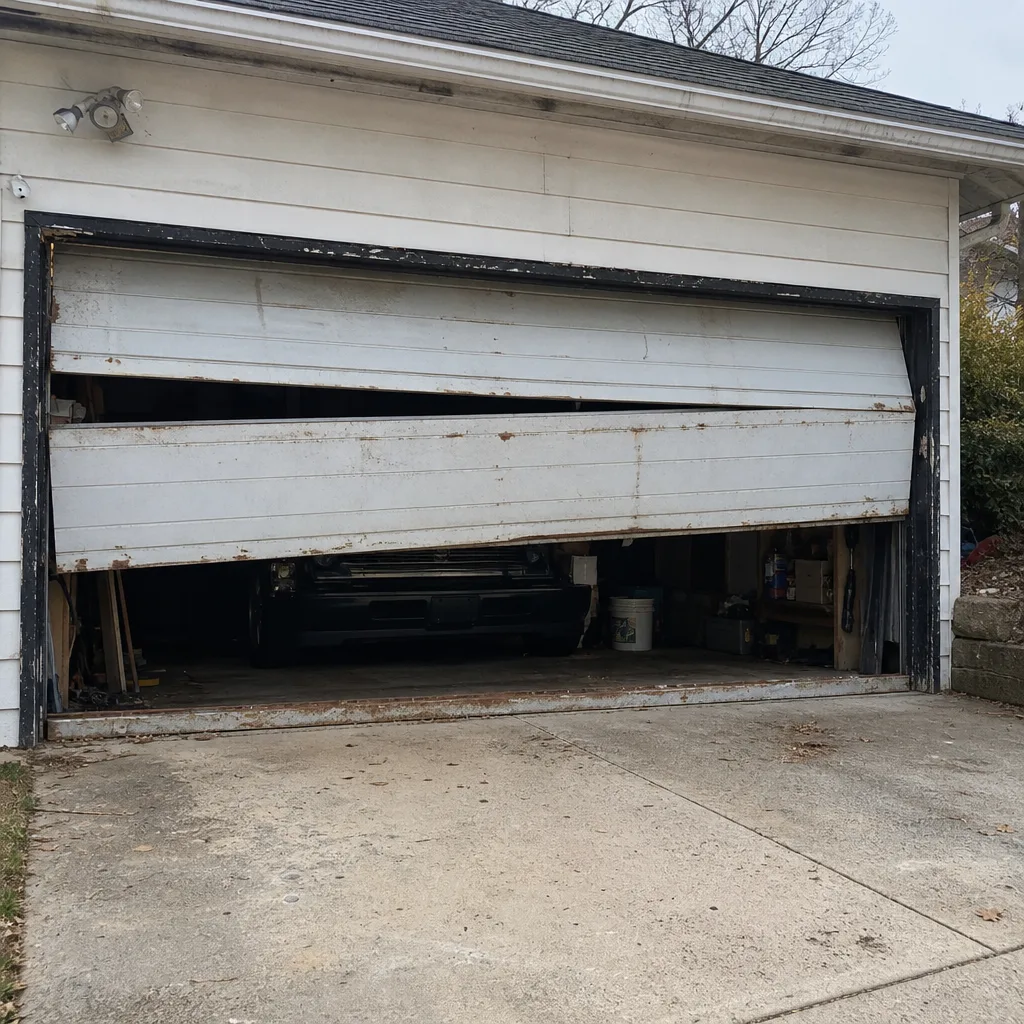 Before
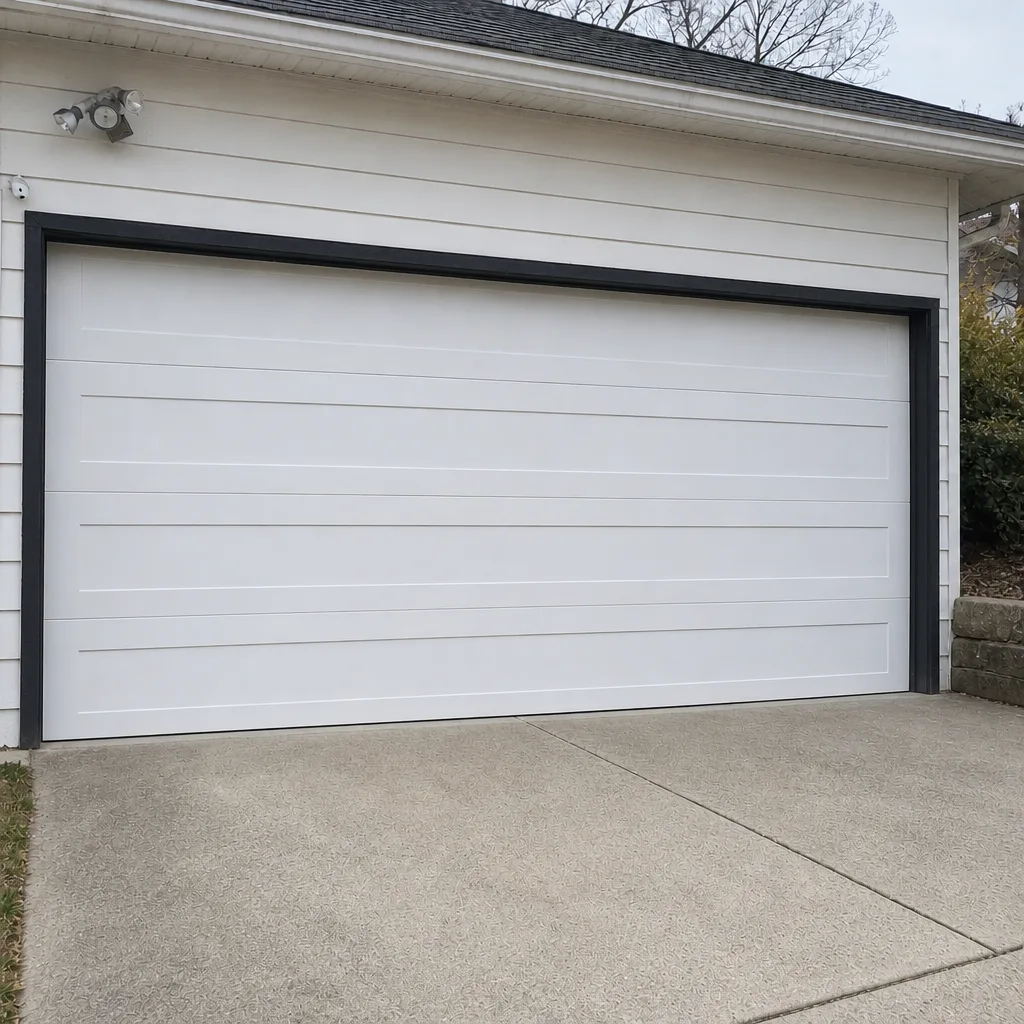 After
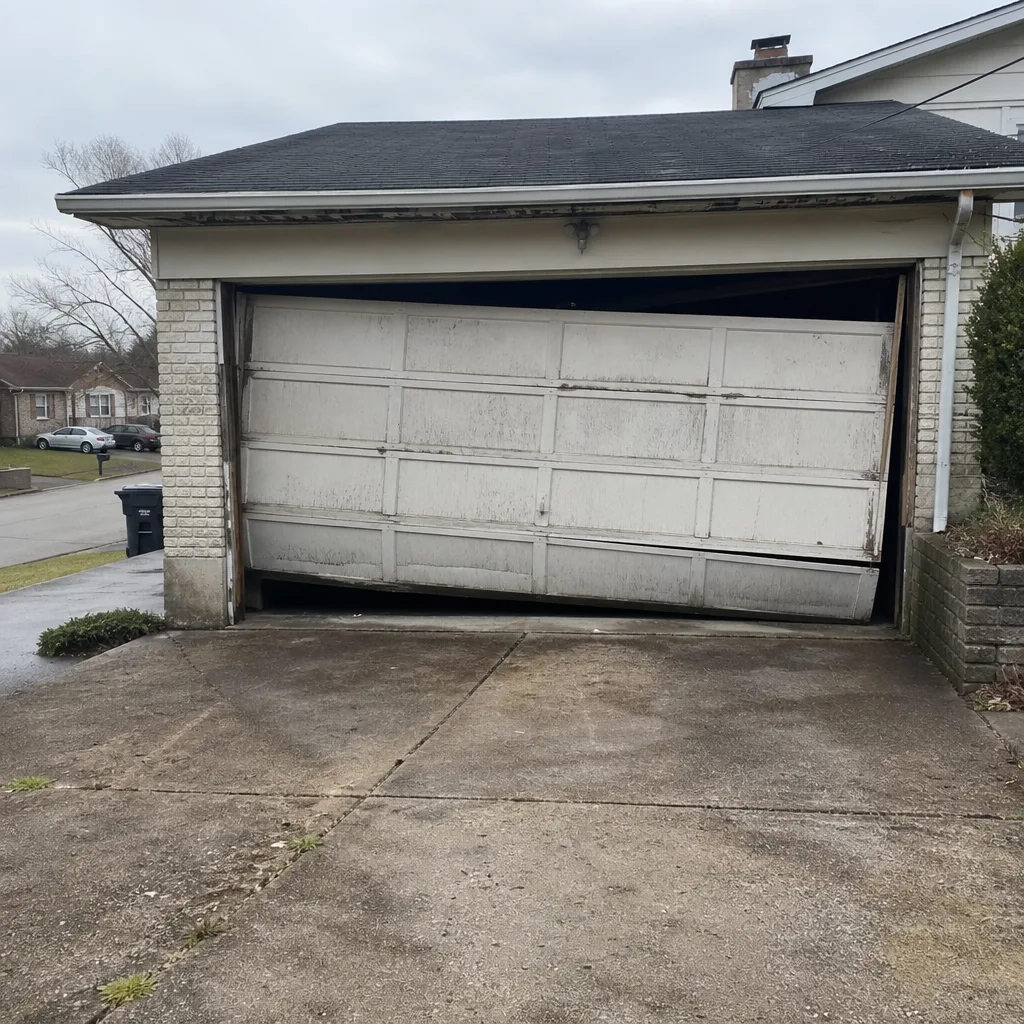 Before
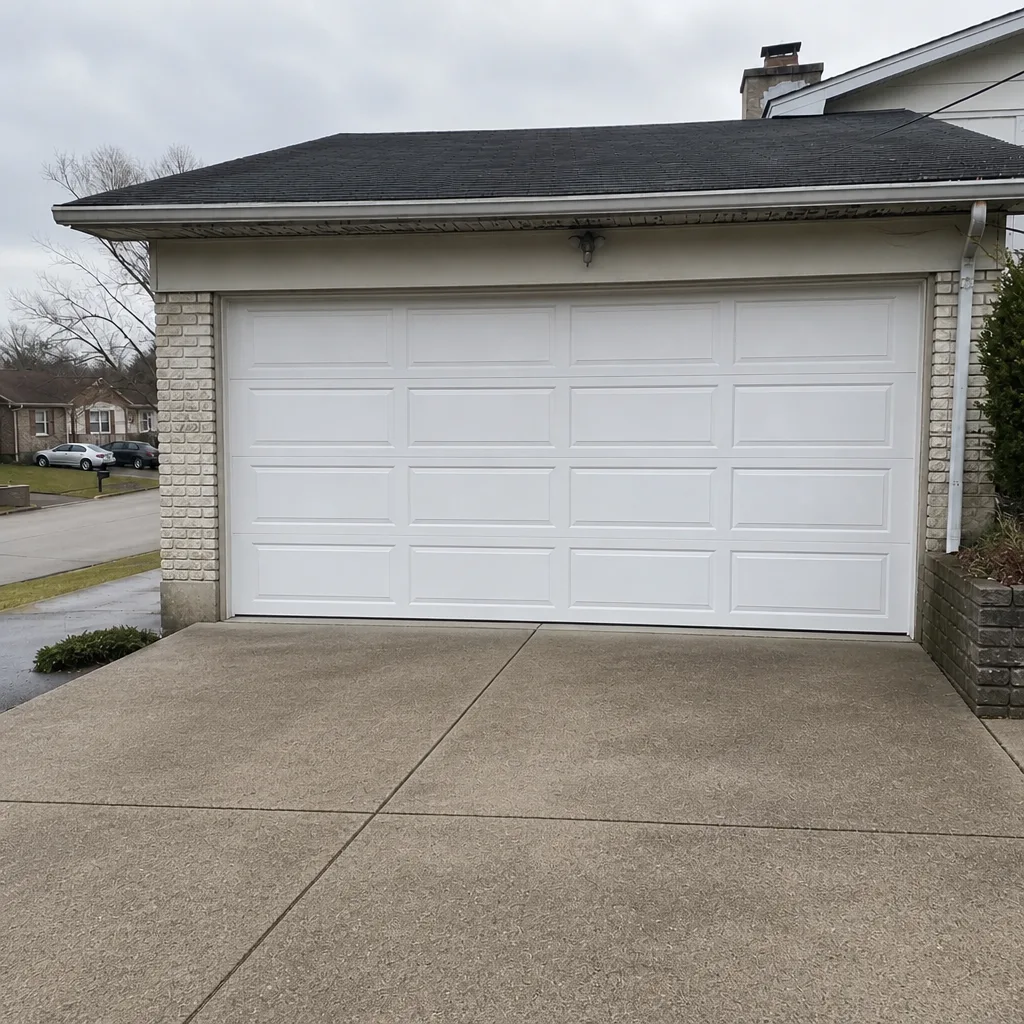 After
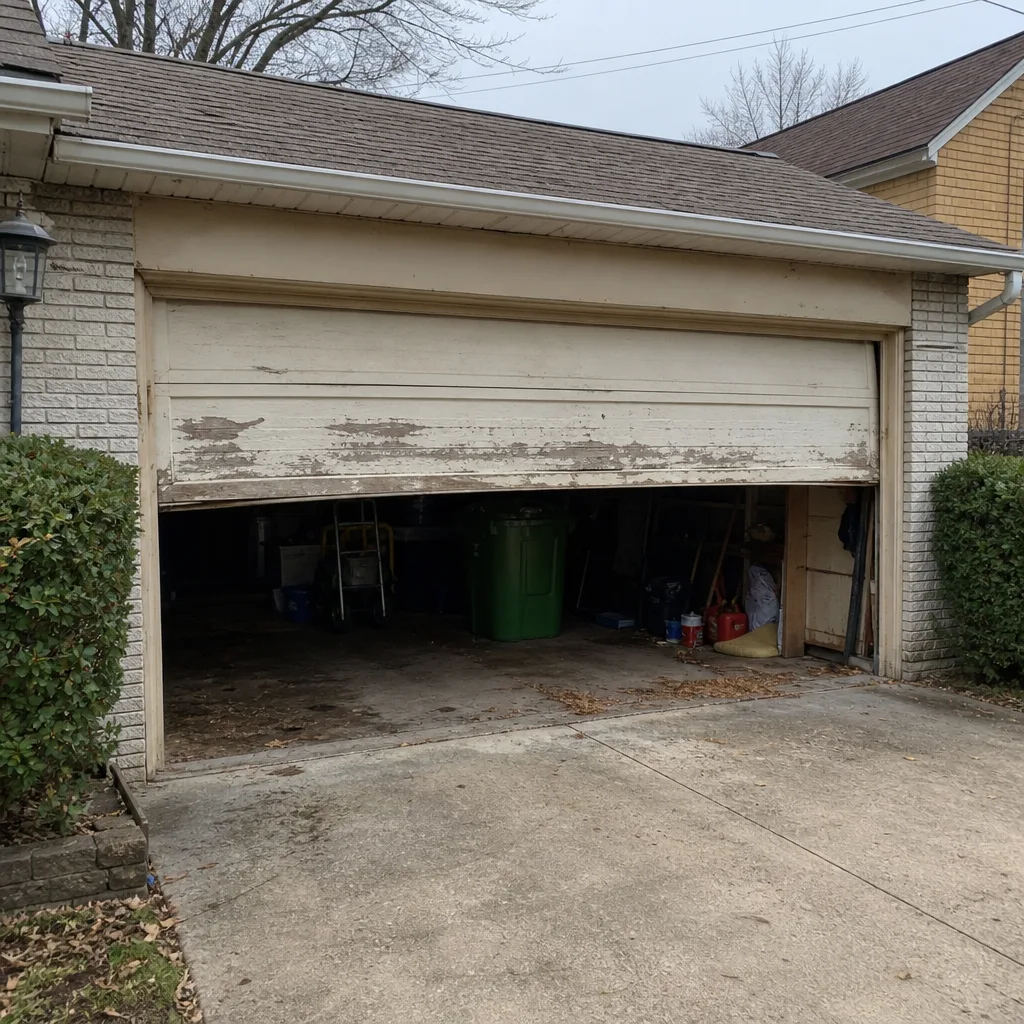 Before
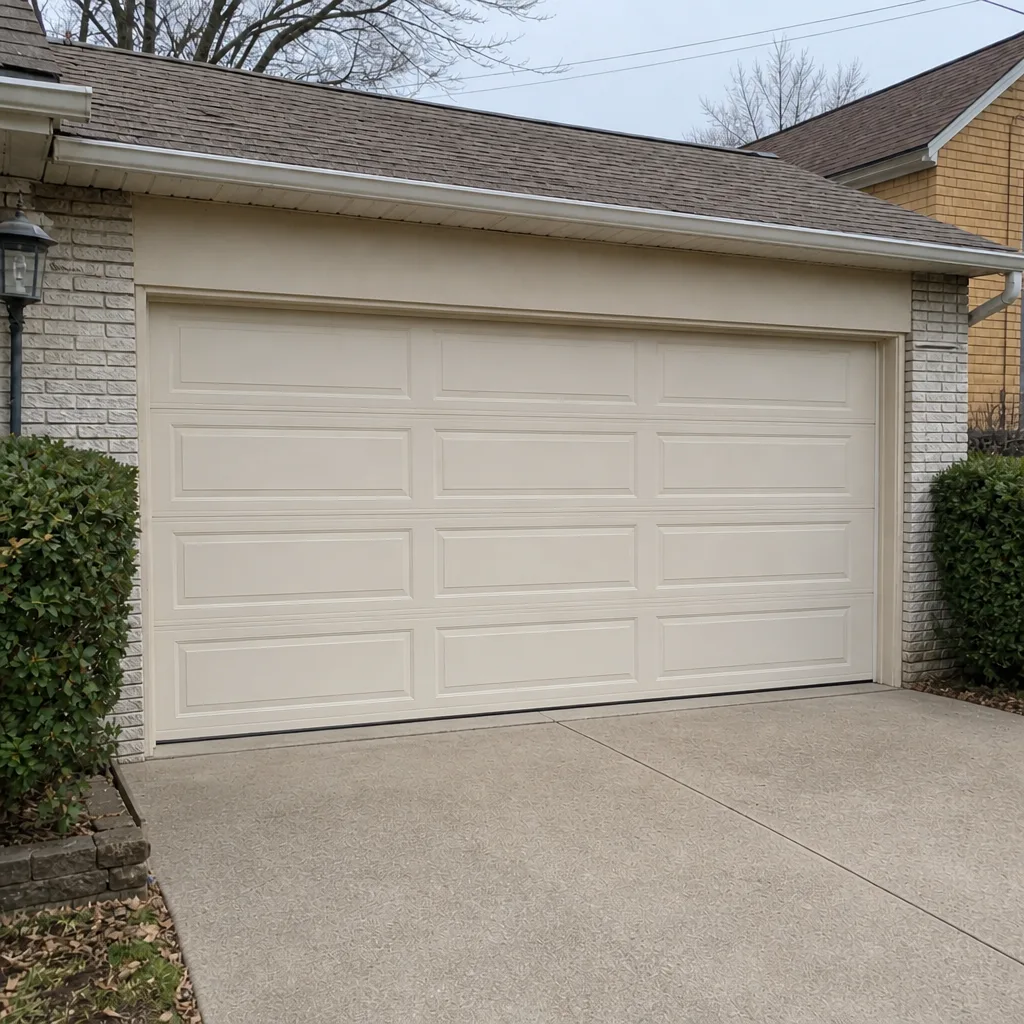 After
When to Call a Professional
Some garage door problems are genuinely a DIY fix, like replacing the battery in the wall remote. Most are not. Call a professional if the door is stuck open or closed, if you hear a loud crack from the spring area, if the door reverses for no clear reason, if the opener runs but the door doesn’t move, if a cable looks frayed or slack, if the door binds on one side, or if the door feels heavier than usual. Those last two often signal a spring that’s near the end of its life, and the safe move is to stop operating the door until a technician looks at it. Tidewater Garage Door Repair offers free estimates in Pittsburgh – call (844) 643-1812, and we’ll set up a time to take a look. If your opener is failing, garage door opener repair is often all that’s needed. If you’re considering replacement, ask about a Pittsburgh garage door installation estimate and we’ll walk you through the options.
Frequently Asked Questions
Ask for the state Home Improvement Contractor registration number, a current certificate of insurance, and a written estimate before any work starts. Verify the registration yourself through the Pennsylvania Attorney General’s database, and if door replacement is involved, confirm permit requirements with Pittsburgh’s Department of Permits, Licenses, and Inspections. A legitimate contractor will answer all three questions without hesitation. Call (844) 643-1812 for a free estimate – we’re happy to walk through the paperwork first.
Yes, and it matters more than most homeowners realize. A technician who knows LiftMaster, Chamberlain, Genie, Clopay, Amarr, Wayne Dalton, Craftsman, and Raynor can diagnose a specific failure instead of defaulting to replacement. When the tech already knows the quirks of your opener model, you get a faster diagnosis and fewer unnecessary parts. Call us for an exact quote if you’re unsure what brand you have – we can help identify it.
The most common mistake is choosing on price and reviews without asking how the technician diagnoses the problem. A cheap quote with no inspection often turns into a bigger invoice after work begins, or a full replacement that a repair would have solved. Ask about the diagnostic process, the balance test, and the parts breakdown before comparing prices. Call (844) 643-1812 for a free estimate that includes a real diagnosis.
Permit requirements depend on the scope of the work. Spring, cable, opener, and roller repairs typically don’t require a permit. Full door replacement, structural changes to the opening, or header extension often do. Confirm with Pittsburgh’s Department of Permits, Licenses, and Inspections before work begins, and ask the contractor whether they handle the permit themselves. Call (844) 643-1812 to discuss your specific project – estimates are free.
Spring, cable, and opener repairs can often be handled same-day if the parts are in stock, and the technician will confirm when they quote. Full door replacement or installation is a scheduled job that requires a free measure and a written estimate before parts are ordered. In either case, we’ll let you know what’s realistic before you commit. Call (844) 643-1812 – we answer 24/7, with fast dispatch from 7am to 7pm, Sunday through Friday.
The written estimate sets the final price. A reputable contractor inspects the door, diagnoses the failure, and quotes the repair before any work begins; that quote is what you agree to pay. If additional problems turn up during the job, you should get a new written approval before the scope changes. Call (844) 643-1812 for a free estimate – the price we quote is the price we stand behind.
The Bottom Line
Hiring a garage door contractor in Pittsburgh is a two-question job. First: can they diagnose your brand specifically, or will they replace parts until something works? Second: do they put the price in writing before the work starts? Everything else – licensing, red flags, inspection steps, permits – is there to confirm those two answers. Verifying HIC registration and insurance, insisting on a proper on-site inspection, and comparing quotes on parts and labor will separate the technicians from the salespeople. Pittsburgh winters and hillside driveways add a little extra wear, so the brand-matched diagnosis is worth the extra call. If you want a straight answer about your door, call Tidewater Garage Door Repair at (844) 643-1812 for a free estimate. We answer 24/7, with fast dispatch from 7am to 7pm, Sunday through Friday.
Written by the team at Tidewater Garage Door Repair.